By the end of this guide, you’ll understand:
- Optimize your App Store listing (ASO) to improve visibility and increase organic downloads.
- Build an app marketing strategy that attracts, acquires, and retains high-value users.
- Leverage paid advertising, content marketing, and social media to scale app installs effectively.
- Improve user retention and engagement through onboarding, analytics, and post-launch optimization.
- Align app development with marketing to maximize long-term growth and return on investment.
With app store competition continuing to intensify, simply launching an app is no longer enough. Combined downloads across the Apple App Store and Google Play are projected to reach approximately 181 billion in 2026, around 38 billion on the App Store and 143 billion on Google Play, according to Statista. With millions of apps competing for users’ attention, a well-planned marketing strategy is essential to stand out, drive downloads, and build long-term engagement.
Standing out among millions of apps takes more than a good idea. You need a plan that covers every stage: getting found, getting installed, and getting people to stick around. Application marketing strategies that work in 2026 blend organic discovery, paid acquisition, and retention into one connected system, not three separate jobs.
This guide walks through the strategies that consistently drive downloads, engagement, and retention, with the data to back each one up.
Best App Marketing Strategies to Increase Downloads and User Retention
A successful app doesn’t grow through luck alone. It requires a marketing strategy that attracts the right audience, drives quality installs, and keeps users engaged long after the initial download. From improving your app’s visibility in the App Store to leveraging paid campaigns, content marketing, and retention strategies, each tactic plays a critical role in sustainable growth.
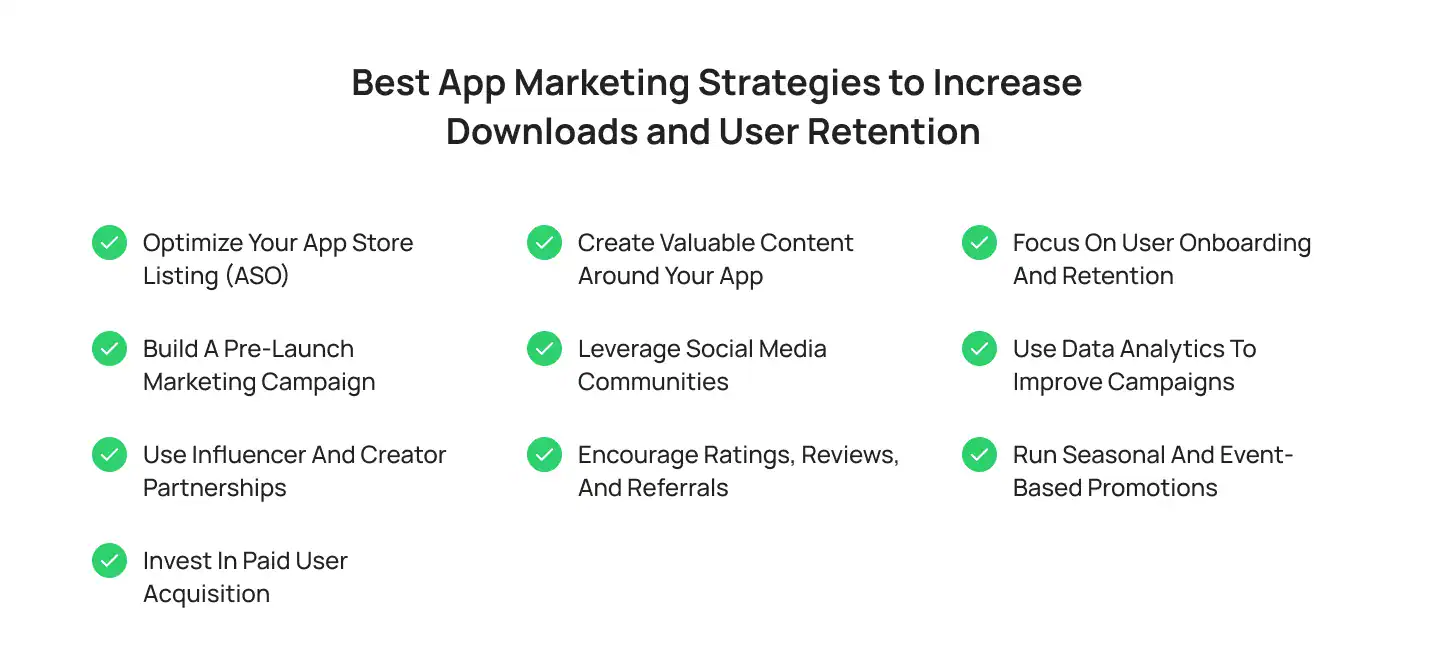
Here are 10 proven app marketing strategies that can help you increase app downloads, improve user engagement, and maximize long-term success in 2026.
1. Optimize Your App Store Listing (ASO)
App Store Optimization (ASO) is the foundation that every successful app marketing strategy is built on. Apple states that search is the primary way users discover apps on the App Store, making an optimized listing essential for improving visibility and increasing organic downloads.
What to optimize:
- App title and keyword optimization. Your title and subtitle carry real ranking weight. Research the exact keyword phrases your target users search, not just the terms you assume they use.
- Compelling app description. Lead with the problem you solve. Save features for the second paragraph.
- High-converting screenshots and preview videos. Real product screens outperform generic mockups. Show the actual interface, not a staged concept.
- Ratings and reviews. People read at least one review before installing a free app, and 80% do before a paid one. Apps rated below 4.0 get scrolled past even when they rank well.
Quick ASO checklist
- Title includes your top keyword
- First three screenshots show real product UI
- Description opens with the core benefit
- You respond to reviews within 24 to 48 hours
- Your listing is localized for top markets
If you’re still deciding what to build before you worry about how to market it, our guide on building a mobile app for a startup walks through the groundwork.
2. Build a Pre-Launch Marketing Campaign
Waiting until launch day to start marketing is a mistake you can’t undo. Build anticipation while the app is still in development.
- Create anticipation before launch. Tease your product’s value, not just its release date.
- Landing pages and waitlists. A simple page that explains the problem and collects emails gives you a list to launch to on day one.
- Email collection. Segment early. Even at this stage, build a rough persona for who’s signing up, so your launch messaging speaks to the right demographics.
- Social media teasers and countdowns. Short clips of the app in action perform better than static graphics.
A realistic pre-launch timeline depends on your build schedule. Check our app development timeline breakdown to plan your marketing calendar around real development milestones.
3. Use Influencer and Creator Partnerships
Big-name influencers cost a lot and often reach the wrong audience. Niche creators usually deliver better results per dollar.
- Choose niche creators over mega-influencers. A creator with 20,000 highly engaged followers in your exact category beats one with a million generic followers.
- Authentic product demonstrations. Scripted ads get skipped. Real usage footage gets watched.
- Affiliate or referral-based collaborations. Pay for results, not just posts.
- Measure campaign performance. Track installs and, more importantly, Day 7 retention from each creator’s audience, not just click volume.
4. Invest in Paid User Acquisition
Organic growth alone won’t get you to scale fast enough. You need a paid strategy to acquire users at a predictable cost.
| Channel | Best For | Notes |
|---|---|---|
| Apple Search Ads | iOS apps with strong ASO | Captures high-intent searchers already in the store |
| Google App Campaigns | Broad reach, Android | Automated bidding across Search, Display, and YouTube |
| Meta (Facebook & Instagram) | Consumer apps, visual products | Strong targeting by interest and behavior |
| TikTok Ads | Younger consumer audiences | Short-form video performs best here |
| Retargeting | Users who installed but didn’t convert | Recovers otherwise lost spend |
Paid and organic aren’t separate jobs anymore. Apple added more ad slots in search results in 2026, which pushed organic listings lower, so a strong ASO foundation now makes every paid dollar go further.
5. Create Valuable Content Around Your App
Content marketing builds a channel you own instead of renting.
- Blog posts and SEO. Answer the questions your target users are already searching. Good SEO compounds over time, unlike ad spend.
- YouTube tutorials. Show people how to actually use your app, not just what it looks like.
- Short-form video content. Reels, Shorts, and TikTok clips work well for feature highlights.
- Educational and problem-solving content. This is what attracts organic traffic that ads can’t buy: people searching for a solution before they know your app exists.
6. Leverage Social Media Communities
Your users are already gathered somewhere. Show up there.
- Build a brand presence. Post consistently, not just when you have news.
- Engage through comments and DMs. Real responses build trust faster than polished campaigns.
- Use the right platform for your category. Reddit and Discord work well for niche or technical apps. LinkedIn suits B2B tools. Facebook Groups still work for local and community-driven apps.
- Encourage user-generated content. A customer’s post about your app carries more weight than your own ad.
7. Encourage Ratings, Reviews, and Referrals
Existing users are your cheapest growth channel.
- Prompt for ratings at the right moment. Ask right after a user completes a positive action, like finishing a task or hitting a milestone, not on first open.
- Reward referrals. Give both the referrer and the new user something of value.
- Turn satisfied users into advocates. A simple in-app prompt after a good experience converts far better than a generic pop-up.
- Manage negative reviews professionally. Respond, don’t ignore. A thoughtful public reply can win back trust even when the review stays negative.
8. Focus on User Onboarding and Retention
Retention now outweighs raw download volume in how app stores rank you, and it matters even more for your bottom line. Average 30-day retention across categories sits around 5% to 7%, so every point you gain is real ground.
- Reduce friction during sign-up. Every extra field costs you users. Ask for the minimum at first, and collect the rest later.
- Build interactive onboarding flows. Show value in the first session instead of explaining it.
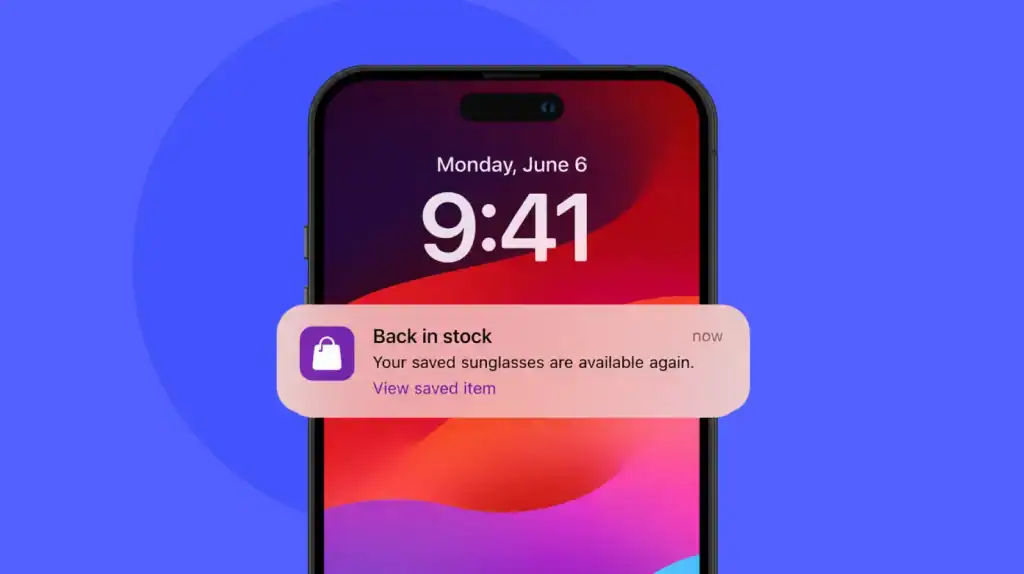
- Send personalized push notifications. Generic blasts get ignored or muted. Notifications tied to actual user behavior get opened.
- Run email and in-app engagement campaigns. Use these to bring lapsed users back and to re-engage anyone who stalled during onboarding.
Why retention beats acquisition
Acquiring a new user costs far more than keeping one you already have. A user who sticks past the first week is dramatically more likely to become a long-term, paying customer. Every strategy above should ultimately point back to this one goal: keep the users you’ve already worked hard to get.
If your app is already live and retention has started to slip, it might be a technical issue as much as a marketing one. Our breakdown of mobile app maintenance costs covers what ongoing upkeep actually involves.
9. Use Data Analytics to Improve Campaigns
You can’t fix what you don’t measure. Analytics should sit at the center of every campaign decision you make.
- Track the full funnel. Installs, activation, retention, and lifetime value all tell a different part of the story.
- A/B test creatives and messaging. Small copy and image changes can move conversion rates by double digits.
- Identify your highest-performing channels. Not every channel deserves an equal budget. Cut what isn’t working and double down on what is.
- Use the right tools. Firebase, Mixpanel, and AppsFlyer each cover different pieces of the analytics stack, from behavioral tracking to attribution.
10. Run Seasonal and Event-Based Promotions
Timing your campaigns around real-world moments gives you a natural reason to reach out.
- Chase App Store featuring opportunities. Apple and Google both spotlight apps tied to seasonal or cultural moments.
- Plan holiday campaigns. Build these into your calendar months ahead, not the week before.
- Tie promotions to industry events and product launches. Relevance drives attention.
- Offer limited-time discounts. Urgency still works when it’s genuine.
- Re-engage inactive users during major events. A well-timed push notification around a holiday or big event can bring back users who’ve gone quiet for months.
End-to-End Support From Development to App Growth

Successful app marketing begins long before your app goes live. The fastest-growing apps are often those where product development and marketing strategies are planned together from the start, rather than treated as separate initiatives after launch.
At Cubix, we help startups and enterprises build, launch, and grow mobile applications across industries, including fintech, healthcare, eCommerce, and more. From strategy and UI/UX design to development, App Store Optimization (ASO), and post-launch growth, our team supports every stage of the app lifecycle through a unified approach.
Our approach focuses on:
- Building scalable applications that support rapid feature updates and continuous improvement based on real user feedback.
- Aligning mobile app development milestones with marketing campaigns, ensuring your product is launch-ready when promotions begin.
- Providing ongoing maintenance, performance optimization, and feature enhancements to improve user retention after launch.
- Combining technical expertise with marketing strategy so development decisions support long-term user acquisition, engagement, and business growth.
If you’re planning a launch or trying to fix retention numbers on an app that’s already live, that’s the kind of work worth talking through before you commit to a roadmap.
Bottom Line
Successful app marketing isn’t about relying on a single tactic. It’s about combining App Store Optimization, content marketing, paid acquisition, user engagement, and continuous optimization into a strategy that supports your app throughout its lifecycle. The businesses that achieve sustainable growth are the ones that treat marketing as an ongoing process, using data and user feedback to refine their approach long after launch.
Who you’re building with matters because an experienced on-demand app development company like Cubix can shape technical decisions around your marketing goals instead of the other way around.
FAQs
1. What is the most effective app marketing strategy in 2026?
There’s no single strategy that works alone. ASO, paid acquisition, and retention work together. A strong app store listing makes paid ads more efficient, and strong retention keeps your ranking healthy in both stores.
2. How much should I spend on app marketing?
It depends on your category and acquisition costs, which vary widely by platform and vertical. A more useful approach: start with a small, measurable budget across two or three channels, track cost per install and Day 7 retention, then scale whatever channel proves out.
3. What’s the difference between ASO and SEO?
ASO optimizes your listing for app store search (Apple App Store and Google Play). SEO optimizes web content for search engines like Google. They use similar principles, keyword research, and conversion optimization, but target different search systems.
4. How do I improve app retention?
Focus on onboarding first. Reduce friction at sign-up, show value in the first session, and use personalized notifications instead of generic blasts. Retention improvements compound: even a few extra percentage points in Day 7 retention change your lifetime value math significantly.
5. Should I focus on organic growth or paid ads first?
Get your ASO right before you spend heavily on ads. A weak listing means paid traffic converts poorly, which drives up your cost per install. Fix the listing, then scale paid spend.
6. How often should I update my app store listing?
Treat it as ongoing work, not a one-time task. Update screenshots and descriptions when you ship major features, and revisit keywords quarterly as search trends and competitor listings shift.