
Key Takeaways
- Stumble Guys achieved over 225 million downloads and an estimated 50 million daily active users, showcasing the massive global appeal of simple yet highly engaging multiplayer gameplay.
- Building a similar game requires strategic financial planning, with budgets typically ranging from $200,000 to $500,000+, covering everything from design and development to backend infrastructure and marketing.
- A strong technology foundation is essential, relying on tools like Unity, Unreal Engine, cloud infrastructure, real-time networking systems, and scalable backend architectures to ensure smooth performance.
- The Stumble Guys timeline highlights how a slow starting mobile game can transform into a global hit through steady gameplay refinement, viral marketing, and strong community-driven growth
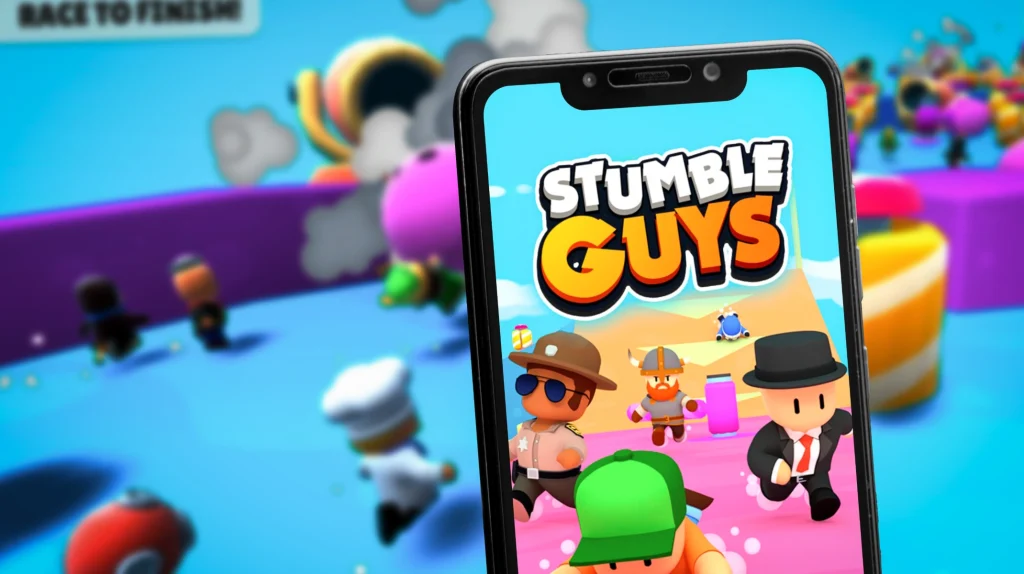
It starts with a simple idea: run, jump, and don’t fall, but within seconds, you’re hooked, racing against dozens of players in pure, unpredictable chaos. That’s the charm behind games like Stumble Guys. What feels effortless and fun on the surface is actually driving one of the biggest trends in the gaming industry today. The global mobile gaming market has already crossed $90 billion in revenue, and lightweight multiplayer games are leading the charge in downloads and user engagement. Many titles in this space hit millions of downloads in a matter of weeks, proving that players are drawn to quick, social, and highly replayable experiences. Yet Stumble Guys stands apart as a remarkable case study, boasting over 225 million downloads, $40 million in revenue, and an estimated 50 million daily active users, all built by a seven-person team from Finland in just two years.
But these games aren’t as “simple” as they look. Behind the bright colors and funny characters is a lot of smart thinking about budget allocation, development timelines, and technology architecture. Everything from how quickly a match starts to how smoothly players move in real time is carefully designed. Developers focus on making controls feel natural, gameplay feel fair, and matches load instantly, no matter what device you’re using. At the same time, small details like rewards, progression, and competitive elements are added to keep players coming back without making the experience feel complicated.
For Stumble Guys, this meant spending 12 months perfecting gameplay mechanics before launch, investing in community management from day one, and choosing a technology stack capable of scaling from thousands to millions of concurrent players. It also required strategically balancing monetization, focusing on cosmetics and ads while avoiding pay-to-win mechanics. The team understood that success wasn’t about having the biggest budget; it was about allocating resources wisely, understanding player psychology, and building infrastructure that could handle explosive growth.
Businesses choose to work with experienced teams who understand what makes these games successful. Cubix is one of those trusted companies in mobile game development, helping turn simple concepts into engaging, high-performing games that players love to come back to. By analyzing breakthrough titles like Stumble Guys and translating those lessons into actionable strategies, Cubix helps studios at every scale, from indie teams to enterprise publishers, navigate the complex landscape of budget planning, development timelines, and technical implementation that separates hits from failures.
[blog_cta]
Budget Analysis and Cost Breakdown for a Game Like Stumble Guys
Building a game like Stumble Guys requires strategic financial planning rather than just a large upfront investment. The total budget is distributed across pre-production, development, testing, launch, and post-launch scaling. Each phase carries its own costs, from talent acquisition and technology stack decisions to marketing budgets and liveOps. A well-planned financial approach helps streamline development costs and budget allocation from day one. For a casual multiplayer game like Stumble Guys, you can consider a budget of the following:

- Minimum of $150,000 for a hardcore game with multiplayer, 3D graphics, and strategic variations
- Mid-level 3D games can range from $50,000 to $200,000
- High-level or large games with multiplayer features can go above 300,000+
- Realistic Range for Stumble Guys-like game: $200,000 – $500,000+
1. Game Complexity & Features
Developing a game like Stumble Guys requires balancing engaging gameplay with scalability. Features like real-time multiplayer, physics-based mechanics, matchmaking, and cross-platform support significantly increase both development effort and infrastructure needs. As complexity grows, so does the overall cost of production.
Estimated Total Cost:
- $25,000 – $120,000+
Cost Breakdown:
- Multiplayer scaling & concurrency handling: $10,000 – $50,000+
- Advanced physics & real-time mechanics: $5,000 – $20,000+
- Live events and seasonal features: $5,000 – $30,000+
- Social features (friends, chat, invites): $5,000 – $20,000+
2. UI/UX Design & Art Assets
UI/UX and visuals shape the player’s first impression and overall experience. This includes menus, onboarding flows, character design, animations, and visual effects. High-quality assets require skilled designers and multiple iterations to achieve a polished look.
Estimated Total Cost:
- $11,000 – $60,000+
Cost Breakdown:
- Iteration & redesign cycles: $3,000 – $15,000
- Extra character skins or animations: $5,000 – $25,000
- Motion graphics or VFX polish: $2,000 – $10,000
- Audio design (UI sounds, effects, music): $1,000 – $10,000
3. Core Game Development
Core development involves building gameplay mechanics, player interactions, and system logic. It also includes multiplayer synchronization, SDK integrations, and performance optimization across devices. Continuous debugging and updates are essential to ensure smooth gameplay.
Estimated Total Cost:
- $28,000 – $120,000+
Cost Breakdown:
- Third-party SDK integrations: $3,000 – $15,000
- Optimization for low-end devices: $5,000 – $20,000
- Bug fixing & iteration cycles: $5,000 – $25,000
- Post-feature updates during development: $5,000 – $20,000
4. Backend Development & Infrastructure
Backend systems support real-time multiplayer gameplay, user data, matchmaking, and security. A strong infrastructure is required to handle global traffic and concurrent players efficiently. Cloud services and server scaling play a major role in maintaining performance and reliability.
Estimated Total Cost:
- Setup: $40,000 – $190,000+
- Ongoing: $5,000 – $20,000+ per month
Cost Breakdown:
- Cloud hosting (AWS, GCP, Azure): $2,000 – $10,000 monthly
- Server scaling & load balancing: $10,000 – $50,000
- Database & storage systems: $5,000 – $20,000
- Ongoing monthly cost: $5,000 – $20,000+ monthly
5. Testing & QA
QA ensures the game runs smoothly across devices and under different conditions. It includes gameplay testing, load testing, compatibility checks, and regression testing. Continuous testing helps identify issues early and improves overall stability before launch.
Estimated Total Cost:
- $10,000 – $50,000+
Cost Breakdown:
- Automated testing tools: $2,000 – $10,000
- load testing: $3,000 – $15,000
- Device compatibility testing: $2,000 – $10,000
- Beta testing & user feedback rounds: $1,000 – $5,000
6. Monetization & In-App Purchase Setup
Monetization systems enable revenue through in-app purchases, ads, and subscriptions. This requires integration with payment gateways, ad networks, and analytics tools. A well-implemented system ensures revenue generation without disrupting gameplay.
Estimated Total Cost:
- $7,000 – $35,000+
Cost Breakdown:
- Payment gateway or store integration: $1,000 – $5,000
- Ad network integration & mediation: $1,000 – $5,000
- Virtual economy balancing systems: $2,000 – $10,000
- Analytics & A/B testing tools: $1,000 – $5,000
- Subscription/battle pass implementation: $2,000 – $10,000
7. Marketing & Launch
Marketing drives visibility, downloads, and user acquisition in a competitive market. It includes paid ads, influencer campaigns, app store optimization, and promotional content. A strong launch strategy is essential to build an initial player base.
Estimated Total Cost:
- $40,000 – $245,000+
Cost Breakdown:
- Paid ads: $20,000 – $150,000+
- Influencer marketing: $10,000 – $50,000
- App Store Optimization (ASO): $2,000 – $10,000
- Community building & management: $3,000 – $15,000
8. Post-Launch Support
Post-launch support ensures long-term engagement through updates, events, and performance improvements. LiveOps content, bug fixes, and community engagement are crucial for retaining players in multiplayer games. Continuous updates help sustain revenue and growth.
Estimated Annual Cost:
- $10,000 – $100,000+ annually
Cost Breakdown:
- LiveOps events & seasonal updates: $10,000 – $50,000/year
- Bug fixes & performance updates: $5,000 – $20,000/year
- New content additions (maps, skins): $10,000 – $40,000/year
- Server maintenance & scaling: $5,000 – $30,000/year
- Community management & support: $5,000 – $25,000/year
Read More: Building Games? Here’s What Founders Get Wrong (And How Cubix Fixes It)
Stumble Guys Development Timeline: From Launch to Global Phenomenon
The journey of Stumble Guys wasn’t an overnight success; it was shaped by a gradual design and development process focused on continuous interaction, scalability, and player engagement. From initial launch to becoming a global multiplayer phenomenon, each stage plays a crucial role in shaping the game’s success

Development and Early Launch (2020-2021)
Stumble Guys officially launched on September 24, 2020, on Android, during a time when many games were attempting to replicate the success of Fall Guys. Unlike quick copycat releases, developer Kitka Games focused on refining gameplay and building a stable multiplayer experience. The game later expanded to iOS in February 2021 and to Steam in October 2021, gradually increasing its reach. However, despite these launches, the game experienced a slow start, with limited downloads and relatively low player engagement during its first year.
Turning Point and Rapid Growth (2021-2022)
The real breakthrough came in early 2022, when the game started gaining momentum, particularly in the mobile-first market. By May 2022, Stumble Guys had gone viral, reaching tens of millions of downloads and a rapidly growing daily active user base. A key driver behind this growth was its accessibility, offering a Fall Guys-like experience on mobile, combined with a strong focus on influencer marketing through platforms like TikTok and YouTube. At the same time, early investment in community building helped foster an engaged and loyal player base.
Acquisition and Global Expansion (2022-2023)
In September 2022, Stumble Guys was acquired by Scopely, marking a major turning point in its growth journey. With increased resources and publishing expertise, the game scaled rapidly, surpassing 200+ million downloads and generating significant revenue. Throughout 2023, the focus shifted to LiveOps, with frequent updates, new levels, and competitive events keeping players engaged. Strategic brand collaborations and partnerships further amplified visibility, bringing in new audiences and strengthening its global presence.
Cross-Platform Growth and Expansion (2024-Present)
Building on its success, Stumble Guys expanded beyond mobile into a full multi-platform experience. The game launched on Xbox, PlayStation, and Nintendo Switch, reinforcing its “play anywhere” strategy. Beyond gaming, the brand also extended into merchandise and user-generated content systems, transforming it into a broader entertainment ecosystem. With hundreds of millions of downloads globally, the game continues to grow through consistent updates, community engagement, and platform expansion.
Read More: What Happens After Game Launch? The Part Most Dev Teams Don’t Tell You
Technology Stack: The Engineering Behind the Success
Building a high-performing multiplayer game like Stumble Guys requires careful selection of a technology stack that supports scalability, speed, and gameplay mechanics. The tools used to build games like Stumble Guys are designed to handle real-time interactions, massive concurrent users, and cross-platform compatibility without compromising performance.

Game Engine & Cross-Platform Support
The foundation of a game like Stumble Guys lies in choosing a powerful, flexible game engine such as Unity or Unreal. These engines enable cross-platform deployment, allowing developers to build once and optimize for Android, iOS, PC, and console. With built-in physics systems, rendering pipelines, and asset management, they ensure smooth gameplay, consistent frame rates, and seamless transitions across devices, even under heavy player loads.
UI Design & Frontend Development
Frontend development focuses on delivering an intuitive and responsive user experience. Clean UI design, fast-loading menus, and smooth navigation are essential to keep players engaged. Lightweight assets, optimized animations, and adaptive layouts ensure the interface performs well across different screen sizes and device capabilities without compromising visual appeal.
Multiplayer Networking & Architecture
Real-time multiplayer games rely on a robust networking architecture to handle thousands of connections from current players. Technologies such as client-server models, WebSockets, and UDP help minimize latency and ensure smooth player interaction. Efficient data synchronization and lag compensation techniques are critical to maintaining fair and responsive gameplay in fast-paced environments.
Backend Systems & Cloud Infrastructure
Scalable backend systems power everything from player’s accounts to real-time sessions. Cloud platforms like AWS, Google Cloud, and Azure provide auto-scaling, load balancing, and global server distribution. This ensures the game can handle sudden spikes in traffic while maintaining stability, uptime, and performance across regions.
Database & Caching Systems
Databases store player progress, inventory, and game data, while caching systems like Redis speed things up by reducing repeated database calls. A combination of relational and NoSQL databases allows flexibility in handling structured and unstructured data. This setup ensures quick data retrieval, seamless progression tracking, and a smooth user experience.
Matchmaking & Real-Time Sync
Matchmaking systems are designed to pair players based on skill level, latency, and availability, ensuring balanced and competitive gameplay. Real-time synchronization ensures that every player sees the same game state simultaneously. Techniques like state interpolation and server authority help reduce desync issues and maintain fitness throughout each match.
Why Cubix is Your Trusted Partner for Mobile Game Development

Choosing the right development partner can make the difference between a game that launches and one that truly succeeds in the market. Cubix brings a blend of technical expertise, creative vision, and market understanding to help businesses build engaging, scalable mobile games. From concept validation to post-launch support, the team focuses on delivering experiences that are not only fun to play but also built for long-term growth.
With deep experience in providing solutions for multiplayer game development, Cubix specializes in creating real-time, high-performance games that can handle massive user bases without compromising speed or stability. The team carefully selects the right technology stack, optimizes gameplay mechanics, and ensures seamless cross-platform performance to maximize reach and engagement.
Beyond development, Cubix also supports monetization strategy, LiveOps planning, and user retention techniques, helping you turn your game into a sustainable revenue-generating product. Whether you’re an indie startup or an established enterprise, Cubix provides end-to-end solutions tailored to your goals, ensuring your game stands out in a highly competitive market.
[blog_cta_2]
Final Thoughts
Building a game like Stumble Guys goes far beyond a simple concept; it requires the right balance of creativity, strategic budgeting, scalable technology, and continuous player engagement. From initial development to post-launch growth, every decision plays a crucial role in shaping the game’s success. By understanding the budget distribution, development pipeline, and the tools and technologies involved, businesses can make smarter, more informed decisions.
When it comes to building similar high-performing games, Cubix stands out as a leading Android game development company, helping businesses design, develop, and scale engaging mobile games with strong multiplayer architecture, smooth performance, and global reach.
FAQs
1. How much money did Stumble Guys make?
Stumble Guys has generated an estimated $40 million in revenue, driven mainly through in-app purchases, ads, and cosmetic upgrades. Its success also comes from strong user engagement and millions of daily active players, which continue to fuel consistent earnings over time.
2. What platforms is Stumble Guys available on?
The game is available on Android, iOS, PC, and consoles like PlayStation, Xbox, and Nintendo Switch, making it a fully cross-platform game that allows players to enjoy seamless gameplay across devices.
3. Is Stumble Guys a single-player or multiplayer game?
Stumble Guys is a multiplayer party game where up to dozens of players compete in real-time obstacle courses. The focus is on fast-paced, chaotic matches where players race, dodge, and survive until one winner remains.